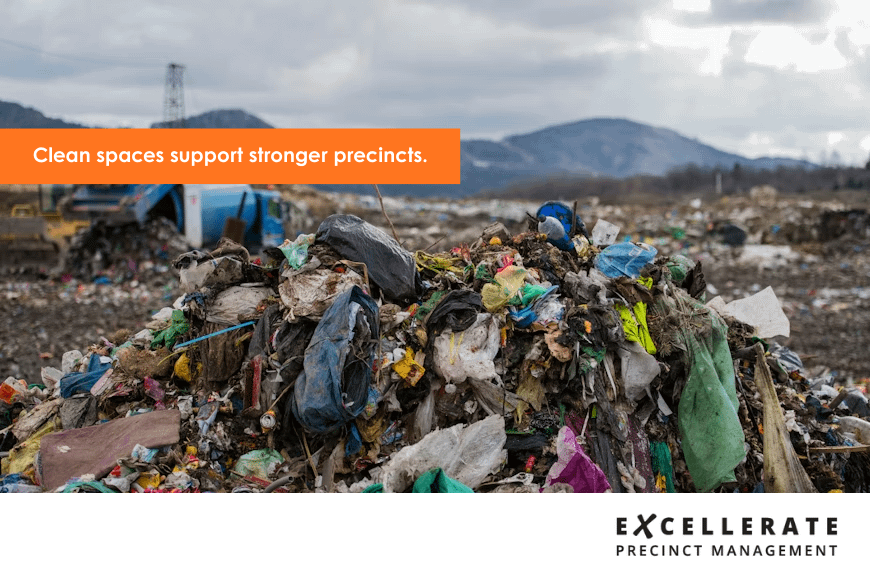
Illegal dumping is one of the most visible challenges in South Africa’s public spaces. It affects how people move, how safe they feel and how they experience a precinct. It also influences how businesses and investors view the area. For precincts, illegal dumping is not only a waste issue. It is a sign of instability that must be managed daily.
Illegal Dumping as a Growing Concern
Many cities in South Africa are under pressure. Service delays, economic strain and high volumes of waste place stress on public environments. The Centre for Risk Analysis often highlights how these pressures affect daily life.
Illegal dumping appears in busy areas, walkways and verges. Some dumps form slowly. Others appear overnight. These sites attract pests, block movement and create unpleasant conditions. They also raise concerns about safety and long-term maintenance.
For anyone using the space, these signs are hard to ignore. For businesses, they influence decisions about staying, expanding or investing.
Why Illegal Dumping Creates Instability
Precincts work best when public spaces feel predictable and well managed. Illegal dumping disrupts this balance.
A single dumping site can:
- block pavements
- create hazards
- reduce visibility
- attract more waste
- discourage foot traffic
- create unpleasant smells
These effects change how people feel about the precinct. Disorder in public spaces can weaken trust and confidence. When this happens, businesses begin to worry about how customers and staff experience the area.
How Illegal Dumping Affects Business Confidence
Business confidence depends on a stable and well-kept environment. Illegal dumping sends the opposite message.
Here are four ways it affects economic value:
It signals poor public-space care
Visible waste suggests that the area is not being managed well. This raises questions about safety and long-term stability.
It disrupts movement
Cluttered pathways affect foot traffic. When customers cannot move easily, businesses feel the impact.
It harms the overall perception of the precinct
People judge spaces quickly. If an area looks neglected, they may choose not to stay or return.
It influences investment choices
Investors want steady, reliable environments. Frequent dumping makes a precinct appear unpredictable.
These factors show why illegal dumping cannot be viewed as a simple waste issue. It is directly linked to business activity and economic confidence.
How Excellerate Precinct Management Responds
Excellerate Precinct Management works daily to reduce the impact of illegal dumping. The approach focuses on monitoring, quick action and strong coordination.
Daily checks
Teams walk the precinct every day. They identify new dumping sites and track areas that need more attention.
Fast removal
Waste is cleared quickly to prevent build-up. This stops small dumps from becoming larger problems.
Hazard control
Dumping often leaves behind broken materials and sharp objects. Removing these hazards helps keep pedestrians safe.
Reporting and municipal support
Some dumping issues require a wider response. Precinct teams report larger cases to municipal partners and work with them to manage longer-term challenges.
Working with local businesses
Businesses are part of the solution. Teams share information, encourage proper disposal and help reduce commercial misuse of public areas.
This combined effort creates a cleaner, safer and more stable environment.
Why Speed Matters
Illegal dumping grows fast. Once a site forms, more waste tends to follow. This is why early removal is important.
Fast action leads to:
- better walkability
- improved visibility
- safer public spaces
- reduced pest activity
- less surface damage
- stronger public confidence
Speed helps protect the environment and prevents the problem from spreading.
How Clean Public Spaces Support Economic Activity
Clean public spaces attract movement. People choose routes that feel safe and pleasant. Businesses benefit when customers can move easily and feel comfortable.
Walkways, verges and open areas shape this experience. If these spaces are cared for, businesses and workers benefit. If they are neglected, activity slows.
Illegal dumping undermines this balance. Precinct management helps restore it.
What People Notice First
People notice small details before they notice the precinct as a whole. They see:
- waste on walkways
- blocked paths
- overgrowth
- surface damage
- broken items
- cluttered corners
These details shape how people feel about a public space. If the area feels uncared for, confidence drops. When precinct teams clear waste and restore order, the impression improves.
The Future of Precincts and Public-Space Care
Illegal dumping will remain a challenge in South African cities, but it can be managed with daily action and clear processes. Precinct management plays a key role in building stable, predictable and welcoming environments.
Cleaner spaces support movement, encourage business activity and improve public perception. They help create a foundation where investment can grow.
Excellerate Precinct Management remains committed to protecting and improving the precincts where people live, walk and work. Turning spaces into places begins with caring for every part of the public environment.
If you would like to learn more about how Excellerate Precinct Management is shaping South Africa’s urban future, contact us today or follow us on LinkedIn and Facebook for updates from our precincts in action.