Cities across South Africa are changing faster than ever before. Population growth, rising service demands and increasing pressure on municipal systems have placed cities under strain. Yet one development is standing out as a practical solution: the growing role of precinct management. Precincts offer focused, localised support that strengthens service delivery and improves the daily experience of people who live, work and travel through urban areas.
Precincts have already improved how communities experience their surroundings, and over the next decade they will become one of the strongest drivers of urban stability, investment and resilience. The shift toward localised management is not just a trend. It is becoming the future of how South African cities operate.
Below is a look at why precincts are set to play a central role in shaping the next ten years of urban development and how Excellerate Precinct Management is preparing for that future.
Why Cities Need Localised Support
Local government is built on several structures that must work together. Municipal councils set policy direction, administrations manage citywide operations, ward councillors represent residents and CRUM offices coordinate regional service delivery. These structures function on a large scale, often planning and operating across multiple suburbs.
The challenge is that residents do not experience the city at a regional level. They experience it on the pavement outside their office, at the intersection they walk through daily or on the road they travel each morning. When faults, damage or delays occur, they appear at a scale far smaller than the city’s operating systems.
This is where precincts bring value. They operate at the exact scale where service failures appear. By monitoring streets, verifying issues and escalating them to the right departments, precincts close the distance between everyday needs and city structures. They provide the focused attention that large systems simply cannot maintain on every street and sidewalk.
As South African cities continue to grow, the demand for this local precision will increase. Precincts are becoming essential to balancing the gap between the city’s broad responsibilities and the public’s expectation of reliable daily service.
Precincts as a Visible Force for Stability
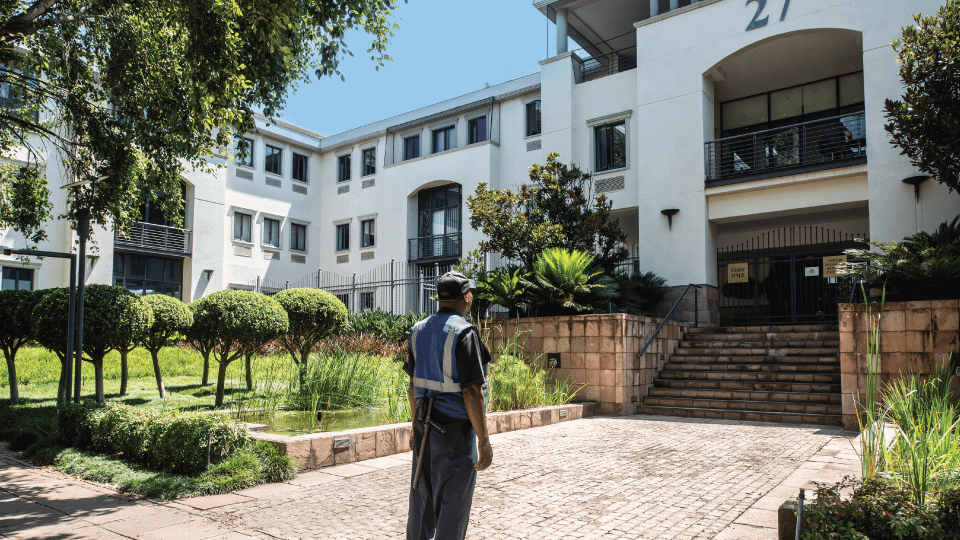
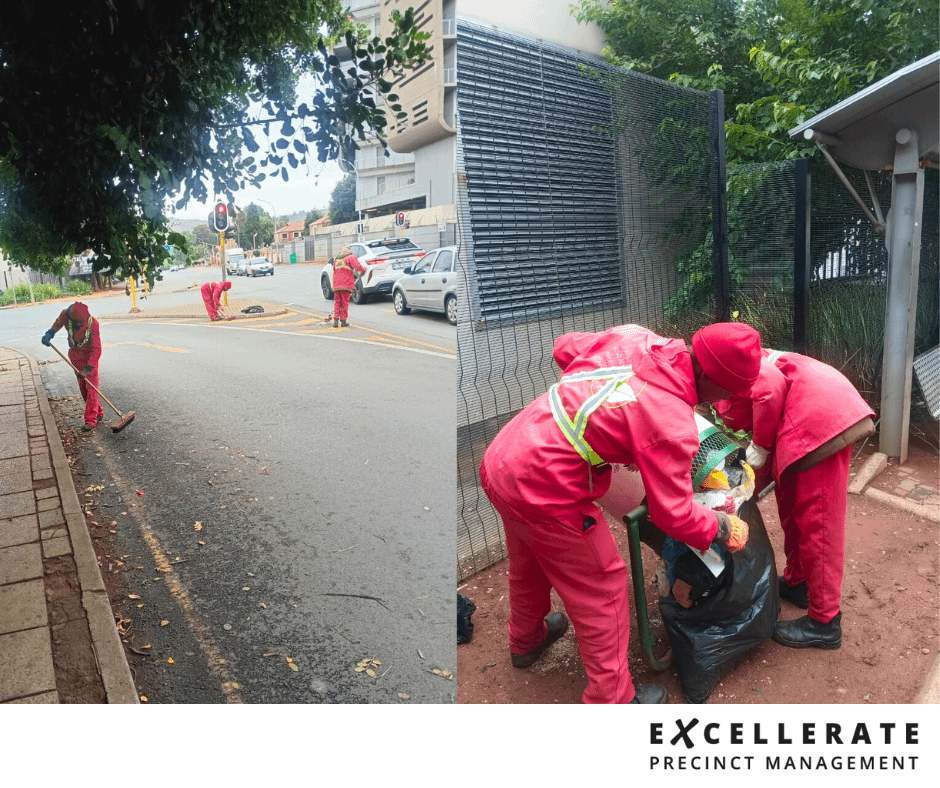
A strong precinct reduces uncertainty in the public environment. Daily tasks such as top up cleaning, lighting checks, refuse removal and stormwater monitoring create a predictable environment that residents and businesses can rely on. This consistency builds trust and supports local confidence.
Precincts also bring structure to reporting and follow up. When roads deteriorate, pavements lift, infrastructure fails or illegal dumping occurs, precinct teams act immediately. They verify the problem, log it with the correct city department and track progress until resolution.
This visible presence, combined with continuous monitoring, produces results that communities can see. Over time, this reliability becomes one of the strongest contributors to safer, cleaner and more resilient precincts.
As more people move into urban areas, the need for visible, reliable teams will only grow. Precincts will continue to be the local anchors that stabilise the public environment.
Why Precincts Support Economic Growth
Precincts have a direct influence on economic activity. Businesses depend on stability, cleanliness, safety and maintained public spaces to attract customers and retain employees. When these fundamentals are strong, businesses thrive. When they break down, investment slows and local confidence weakens.
Precincts improve the operational environment for businesses by addressing the small issues that influence commercial success. Clean pavements, litter-free streets, working lights, maintained verges and rapid response to faults all create conditions that support trading, hospitality, tourism and corporate activity.
Precincts also help property owners preserve the long-term value of their assets. Regular maintenance reduces deterioration, prevents more expensive repairs and improves the perception of an area. This leads to higher occupancy, stronger tenant retention and increased investment interest.
As South Africa focuses on economic recovery, well managed precincts will play a larger role in supporting business growth across key districts.
Precincts Improve Coordination With Municipal Systems
The documents provided outline the complexity of local government. Councils, CRUM offices, city administrations, MPAC committees and oversight structures all form part of an intricate system. While these structures deliver essential services, they operate across large regions with multiple priorities.
Precincts strengthen that system by operating as a partner rather than a replacement. They provide important functions such as:
- Verifying service delivery faults
- Reporting issues with precise location details
- Maintaining direct communication with city departments
- Following up on outstanding repairs
- Documenting progress
- Supporting long term planning with detailed field observations
This coordination reduces pressure on the city and helps ensure that issues receive attention faster. It also improves accountability, which is increasingly important as municipalities manage increasing demand with limited resources.
In the future, this partnership model will become even more important. Cities will rely on precincts to support neighbourhood-level performance, ensuring that focus remains on the daily experience of residents and businesses.
The Next Ten Years: Data, Precision and Community Partnership
South African cities are moving toward more integrated urban management models. Over the next decade, precincts will advance in several areas.
1. Data driven reporting
Precincts will increasingly use digital tools to log issues, record field conditions and track progress. This creates reliable datasets that support both city planning and precinct operations. Accurate data reduces duplication, speeds decision making and improves resource allocation.
2. Predictive monitoring
With continuous field presence, precincts can anticipate issues before they escalate. Early detection of damaged surfaces, blocked drains, failing lights or vandalism helps prevent avoidable deterioration and reduces long term cost.
3. Stronger community communication
Precincts will become one of the primary communication channels for neighbourhood updates. Regular reporting, community feedback and visible activity help build trust and increase participation in local improvement efforts.
4. Improved collaboration with formal city structures
Precincts will strengthen their relationships with ward councillors, CRUM teams, service departments and property owners. As demands on cities increase, this collaboration will be crucial to maintaining operational standards.
5. High impact, people focused environments
The future of urban management will rely on environments that feel safe, cared for and well managed. Precincts will continue to provide the human presence that makes this possible.
How Excellerate Precinct Management Is Preparing for This Future
Excellerate Precinct Management is already positioned for the next era of urban development. With multidisciplinary teams, structured reporting systems and strong relationships with municipal partners, the organisation supports precincts across Johannesburg in delivering consistent, high quality service.
From daily cleaning to technical inspections and rapid fault escalation, Excellerate Precinct Management provides the local attention that improves public spaces and strengthens service delivery systems.
The next decade will see precincts play an even larger role. Well managed precincts will support stronger local economies, safer communities and healthier urban environments. With a commitment to precision, care and partnership, Excellerate Precinct Management will remain at the centre of this progress.
Final Thoughts
If you would like to learn more about how Excellerate Precinct Management is shaping South Africa’s urban future, contact us today or follow us on LinkedIn and Facebook for updates from our precincts in action.
Turning spaces into places.